


Leveraging Motivation and Engagement and Navigate Change
In response to an ever-evolving economic environment, companies undergoing institutional change look to leverage the power of employee engagement. However, true employee engagement cannot be imposed, and HR professionals must establish an internal policy of valuing employees before asking them to serve the company’s interests. According to a 2018 CXP survey (1), HR professionals are facing many additional challenges in their role, such as HR quality of service, data reliability, regulatory compliance and administrative productivity. In fact, HR professionals need to have a reliable HR service before tackling the commitment to business transformation through engagement. This is paradoxical in a rapidly changing world, where it is necessary to be agile and where employee engagement is the key to success. This may come as a surprise, the notion of engagement appeared a while back in the 1980s, when companies understood that employee engagement provided a definite competitive advantage (2); yet a lot of work is still to be done to achieve that ultimate goal.
Engagement from a Motivation Perspective
It is not easy to engage employees to serve the interests of their respective organizations. They must first motivate them. Since motivation is intrinsic to each individual and is correlated to their own values and personality, to grow a business, managers need to consider each team’s culture as a unique set of personalities and motivations. It is only by doing so that they can foster engagement and allow the organizational change to happen (3).
Engaging People During Times of Change
Engaging individuals requires a clear definition of the change expected for the working teams, a simple explanation of intent and a convincing argument for change. Managers must also give some elements on the behavior expected of teams and a reasonable timetable. Engagement depends heavily on the relationships between managers and their teams, during times of change it’s important for managers to focus on these relationships to achieve desired results. In doing so, it’s necessary to revisit management methods. For success it’s found that managers must be able to listen, be empathetic, honest and transparent towards their teams (4).
Becoming Human Centric
Companies are increasingly focusing on the individual’s place in the collective and are developing “symmetry of care,” i.e. they are making the quality of the relationship with their employees equal to the one they maintain with their customers. This concept, which appeared in 2007 in the book “Du management au marketing des services” by Benoît Meyronin and Charles Ditandy, is one of the levers of any transformation process. Vineet Nayar’s global success book “People First, Customers Second” goes further by putting employees before customers and is a global success. He advocates management through trust, because according to him, operational employees carry the value of a company. In the front line with customers, they are the ones who bring the real added value because they are willing to create tailor-made services or products capable of meeting the needs or challenges of the market.
In short, the agile transformation of a company takes its momentum from the revolution in managerial methods and leads to cultural changes that value the entire social body.
Sources:
- Employee Engagement and Change Management 1,Dr. C. Swarnalatha , 2,T.S. Prasanna,1,Professor & Head, Department of Management Studies, ANNA UNIVERSITY, 2013.
- Eight best practices of change : engagement, John Quereto, Expresswork,, August 8th, 2017.
- Employee Engagement and Organizational Change, Stavros Georgiades, Frederick University, January 2015.

Talentobe Manager launches digital self-service offer to automate process for customers
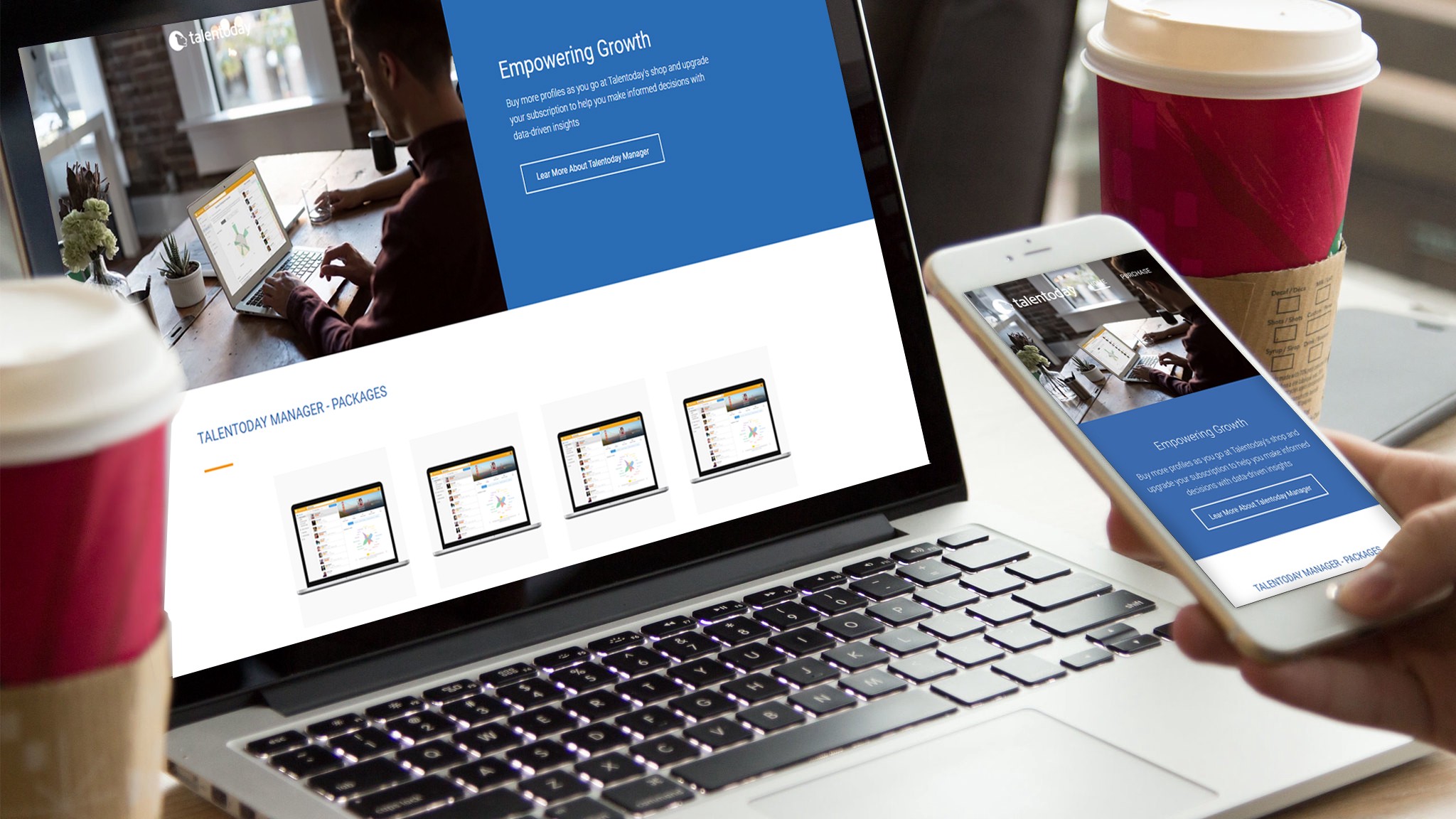
Talentobe, a human centric, people analytics solution that empowers individuals and teams to identify and harness their unique soft skills to grow, recently launched its online shop. I interviewed Benoit Patra, Talentobe’s CTO, and Othmane Lahlou Amine, Key Account Manager, to explain what this initiative means for the company and its customers.
Can you explain what the Talent shop consists of?
Benoît: Our Talentobe Manager solution for HR Professionals is used to better identify talent using an assessment to evaluate an individual’s personality, motivations, and behaviors. Until now, we offered companies unlimited packages that allowed them to recruit one pool of candidates per year to be purchased through their account manager. Then, we realized that one standard offering can be somewhat problematic for some of our clients. Today, we are launching the self-service Talentobe shop, which allows them to buy as many profiles as they need when they need them.
Why did you decide to launch this new and innovative offer?
Othmane: This shop is actually not a surprise for our clients. They requested it, and we made it happen. Our customer satisfaction and feedback drive our innovation, and the shop is actual proof of that. The Talentobe shop now allows them to be autonomous and buy the number of credits they need without any support from the sales or customer success teams. With that said, if anything, this shows that companies are more mature and willing to invest to digitize their HR processes. However, they do not always know where to start, as the scope is quite large. At Talentobe, we offer them a solution that modernizes their recruitment and talent management processes, that is easy to use and access, and that is adaptable to their specific needs.
What is the added value for HR Professionals?
Benoît: The process of purchasing new credits to access additional profiles is completely automated. This allows any HR professional to be fully autonomous, from the order form to invoicing, including refund services and discount offers. Customers buy new packages and pay by credit card or Paypal. We ensure a completely secure payment by partnering with Shopify, a great and proven e-commerce platform.
It is accessible from within the app and for new Talentobe members regardless of the size, location and budget of the company. The only requirement is to have a Talentobe account, which is free and doable in less than 2 minutes.
Othmane: Our client base is extremely diverse, from very small to global; what they shared was the need for autonomy in managing their subscription. The shop allows them to do just that. And by doing so, they save time and money while modernizing their processes throughout their talent life cycle.
In conclusion?
Othmane: The Talentobe shop for HR professionals shows that they can provide their company with a high value-added service, that is easy to use, innovative and accessible by modernizing their image among candidates and employees. Today, HR professionals want and need to be actors in the transformation of their processes. They are convinced that they have a crucial role to play in strengthening their services, and thus enhancing the employer brand; we help them do just that.

Leverage Soft Skills to Accelerate Employee Training
According to the Organization for Economic Co-operation and Development (OECD) figures, just under one-third of French people from 25 to 64 attend work-related training each year. Compared against research showing that 32% of jobs will change with technological progress and 14% risk being automated, this shift may cause concern for employers as they look to remain competitive and sustain business in the future. For employers, training will become crucial to address organizational skill gaps with the introduction of new technologies. From the employee perspective, the 2017 Cegos Barometer shows that, while 99% of French employees believe it is important to train throughout life, only 28% of them consider vocational training to be relevant for companies (Institut YouGov study).
Develop Strategic Social Skills
With the reality of declining employee engagement and increasing turnover, a direct consequences of dissatisfaction with professional training, companies must take the lead in developing the social and situational skills that will ensure their success in a changing environment.
Although the workplace is changing to be increasingly digital, this doesn’t limit employers to “hard skills” but also opens the door for “soft skills” training, which provides long term personal and professional development for employees. In a recent survey conducted by RegionJobs, 82% of the 6,790 respondents (324 recruiters and 6466 candidates) voted that life skills are the most important recruitment criteria. This finding was supported by a study completed by the Employment Guidance Council, confirming the importance of socio-emotional skills — such as self-control, problem solving and perseverance — for the emerging and evolving professions.
Unleashing the Company’s Potential by Unlocking the Potential of Employees
In the same survey from RegionJobs, the findings go on to that “life skills while considered crucial, recruiters still tend to be more flexible with them”. This is similar to the rationalization that occurs when people on a diet “cheat”, a common example of cognitive dissonance.
On the other hand, it is imperative for companies to rethink both recruitment and training. Employees need to be assured that the training provided will enable them to develop professionally by addressing both hard and soft skills. While employer-sponsored training will empower employees to become active participants in their development, while benefiting from the current political and legislative incentives, such as training tax benefits.
Rely on New Training Methods
With improvements to digital learning tools, learner engagement has increased through a personalized approach that takes the individual’s personality and motivations into account. Through having engaged learners, organizations are able to manage training programs upstream and develop skills from within their current organization, allowing them to remain competitive while retaining their existing workforce.
Although the positive impact of these tools is apparent at the macro level, it’s no secret that digital learning solutions can be costly to implement. So, can we evaluate the monetary return on our investment? In looking at IBM’s study on the ROI of training they estimated they were able to save nearly $200 million after implementing an e-learning strategy. Furthermore, through a study conducted by the American Society for Training and Development, it was found that an adapted training program improves employee income by 218%.
Changing working environments and attitudes
As new work environments emerge in the digital age, organizations must encourage new behaviours to facilitate learning — such as, manager engagement for communication of objectives, valuing efforts and rewarding success. It’s also critical to review the company’s decision-making processes and ensure it allows for autonomy, while providing flexibility for new initiatives or innovation.
In looking at soft skills, we’re promoting that it is necessary for employers to promote learning for individuals, which implies a de facto — or inherent — change in management style, allowing for more freedom for both managers and employees.
Sources:
- La formation professionnelle en France, est-elle prête pour l’avenir?, OECD, Fev 2019
- La formation professionnelle en 2017, Observatoire Cegos, Oct 2017
- Turnover Report, SHRM 2019
- Salon du Travail et de la Mobilité Professionnelle, CP, 17 Jan 2019
- Enquête : comment recrute-t-on en 2017?, Priscilla Gout, Sep 2017
- Cognitive dissonance, Talentobe Certification, Talentobe, 2018
- Automatisation, numérisation et emploi, Conseil d’orientation pour l’emploie, tome 2: l’impact sur les compétences, Sep 2017
- LOI n° 2018–771 du 5 septembre 2018 pour la liberté de choisir son avenir professionnel, Legifrance
- The Value of Training, IBM Corporation, 2014

Be Unique: One Size Does Not Fit All
The idea of the “employer brand” is becoming exhausted with a flurry of best practices and standards, but we believe the exhaustion relates to companies being out of touch with what employees are really experiencing. Today there is a need for a holistic and authentic approach across the company’s brand, as the company’s employer brand is central to attracting talent and retaining employees. So, how do we bring new life to the “employer brand” at a time when social interaction is being digitized? What if restoring human relationships was the solution?
By returning to its core values, and purpose, companies can start a new foundation and ensure that it’s attracting talent that match its unique company culture. This fact has been a compressed reality for so long that, in France, the Pacte Law has been enacted to help with the transformative challenges and mutations that companies are facing by emphasizing on the corporate social responsibility (CSR) through the introduction of a new moral pact between a company and its social and environmental ecosystem. QED
Distinctiveness is the lasting differentiation
It is therefore vital for companies to reconnect with their ecosystem by working on identifying what makes them unique and what makes their team(s) exceptional. Through reconnecting with their ecosystem, companies will be able to identify their distinctive image and identity. Which will help them to transparently communicate their authentic purpose and true holistic employee experience — attracting and retaining the right people who share their values and integrate into their sub-culture.
Human Centricity
Given the importance of company culture, and how today it is becoming central in human resource strategy, we’re seeing a number of recruiters utilize soft skills (skills related to interpersonal behaviors) when screening and shortlisting candidates. In fact, by shifting their focus to soft skills, companies get the opportunity to revisit their own values and create that distinctive, strong, social and moral pact that candidates can identify with and employees feel empowered by.
Developing a “People Skills” Directory
Each company is unique, each profession is unique, and the chemistry of the employees is unique.One the many ways to achieve coherence and that goal of distinctiveness is the creation of people skills Directory. An index that list employee behaviors which is intrinsically what makes a company’s culture unique. Conclusions can be used to create that authentic employer brand while evolving overtime based on employee feedback.
To attract the right candidates, foster engagement and retain employees, HR professionals can use elements of their company culture to answer the questions “which projects will naturally speak to employees?” and “on which projects will individuals naturally perform well?” to bridge the gap between employee values and the company’s goals. Ultimately, this will allow companies to create a healthy and remarkable work environment, a strong social pact, a strong culture, and a structural — sustainable — economic growth.

Radio, Waves, Neuroscience… Do you Know What They Have in Common?
Today’s post deals with the relationship of strategy to human capital. Today, it is an inseparable pair whose interactions must be understood so that any adaptation, of individuals and organizations, to the new conditions of the working environment can be made in an optimal manner. Business models are changing, startups, however unstable, attract more young and dynamic executives, while large groups, large by their means, seem to fall off their pedestals*. If, at first glance, we realize, in dismay, that “the stability of an enterprise”, yet a dinosaur argument, is overcome by the dictatorship of the foosball, one wonders what will really motivate people to work in a company.
- Is it the technical skills?
- Is it the meaning of the missions?
- Is it the enrichment of individuals?
In other words, and to illustrate our point, we quote an excerpt from the book “Parallel Worlds” by Michio Kaku, American theoretical physicist and futurist.
“ All around you, there are hundreds of different radio waves being broadcast from distant stations. At any given instant, your office or car or living room is full of these radio waves. However, if you turn on a radio, you can listen to only one frequency at a time; these other frequencies have decohered and are no longer in phase with each other. Each station has a different energy, a different frequency. As a result, your radio can only be turned to one broadcast at a time.Likewise, in our universe we are “tuned” into the frequency that corresponds to physical reality. But there are an infinite number of parallel realities coexisting with us in the same room, although we cannot “tune into” them. Although these worlds are very much alike, each has a different energy. And because each world consists of trillions upon trillions of atoms, this means that the energy difference can be quite large. Since the frequency of these waves is proportional to their energy (by Planck’s law), this means that the waves of each world vibrate at different frequencies and cannot interact anymore. For all intents and purposes, the waves of these various worlds do not interact or influence each other.”
What about the neurosciences?
Neurosciences, and psychometry in particular, intervene to support this exercise of search and identification of “frequency” in the field of human capital management. A new way to rethink management. When psychometry sets foot in the company, in this place of authority, rules and processes, it is to bring intelligence and well-being to all those who are trying to escape by promoting the alignment of “frequency” of the individual with his work environment. And finally, it is also to bring more efficiency, competitiveness, to the organisation and ultimately results by almost drastically reversing the commitment of its employees. In conclusion, I invite you to discover your frequency. Take the test here for free or ask for a custom demo here!
MICHIO KAKU: Graduated from Harvard (B.sc.,1968) and Berkeley University (Ph.D.,1972). Engaged in work on the “theory of everything” seeking to unify the four fundamental forces of the universe. Among his books “ Physics of the Future: How Science will Shape Human Destiny and our Daily Lives by the Year 2100”.
* Only 9% of the employees in France say they feel engaged at work, Gallup 2013
A Menu tailored to your needs
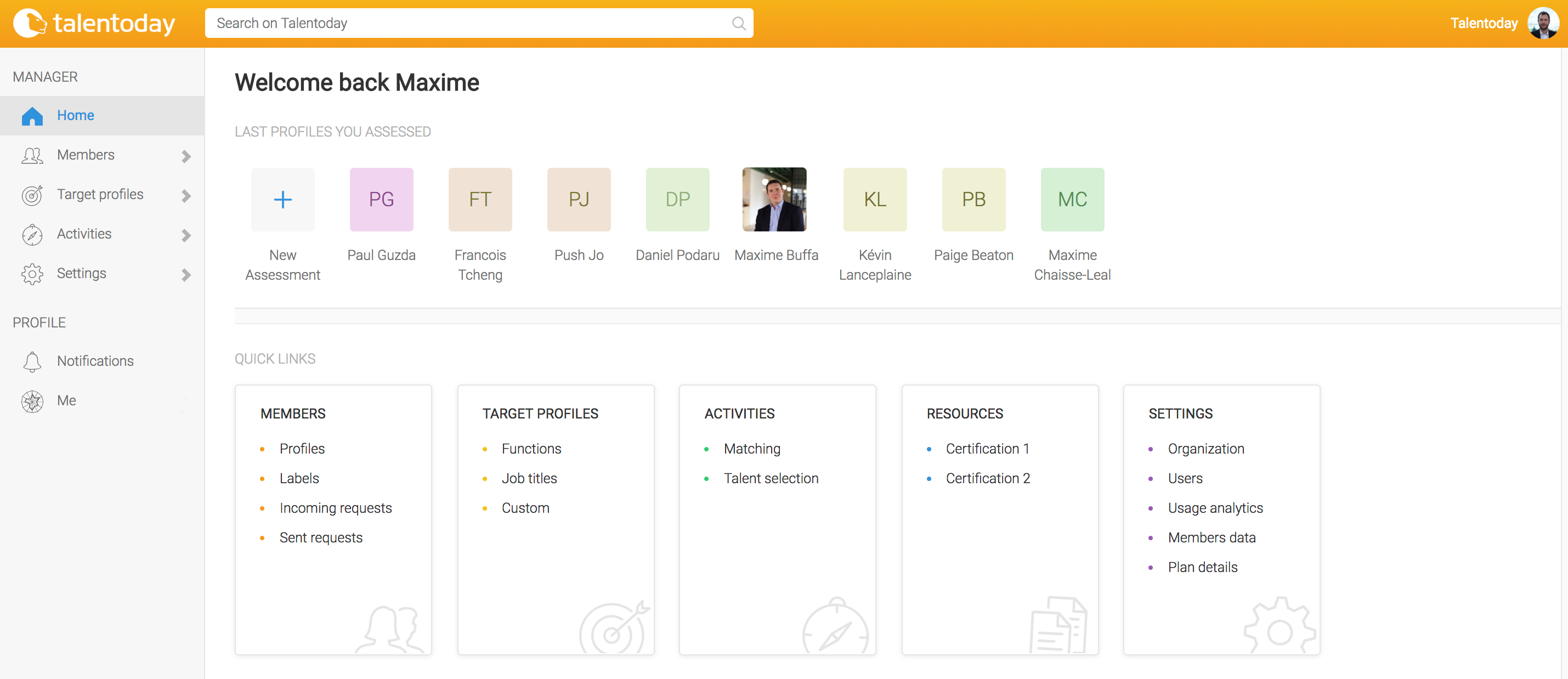
Say hello to your new Talentobe Manager menu ! As we’ve mentioned in our 2018 roadmap, user experience is key for Talentobe. That’s why we are launching a complete redesign of the Talentobe Manager menu, tailored to your specific needs.
In the past we’ve had some feedback that navigating the Talentobe Manager account could be a bit confusing, with features scattered in the menu and sometimes placed in hard-to-reach tabs.
In order to build this new menu, we’ve adopted a user-centric method. Indeed, Talentobe has many uses : recruitment, coaching, career counseling, mobility, talent management… We wanted to provide you an intuitive, task-driven navigation that fits seamlessly with your processes. To this end, we set up a user panel whose feedback and active participation ensured the new menu design would be dedicated to your needs and better showcases its features.
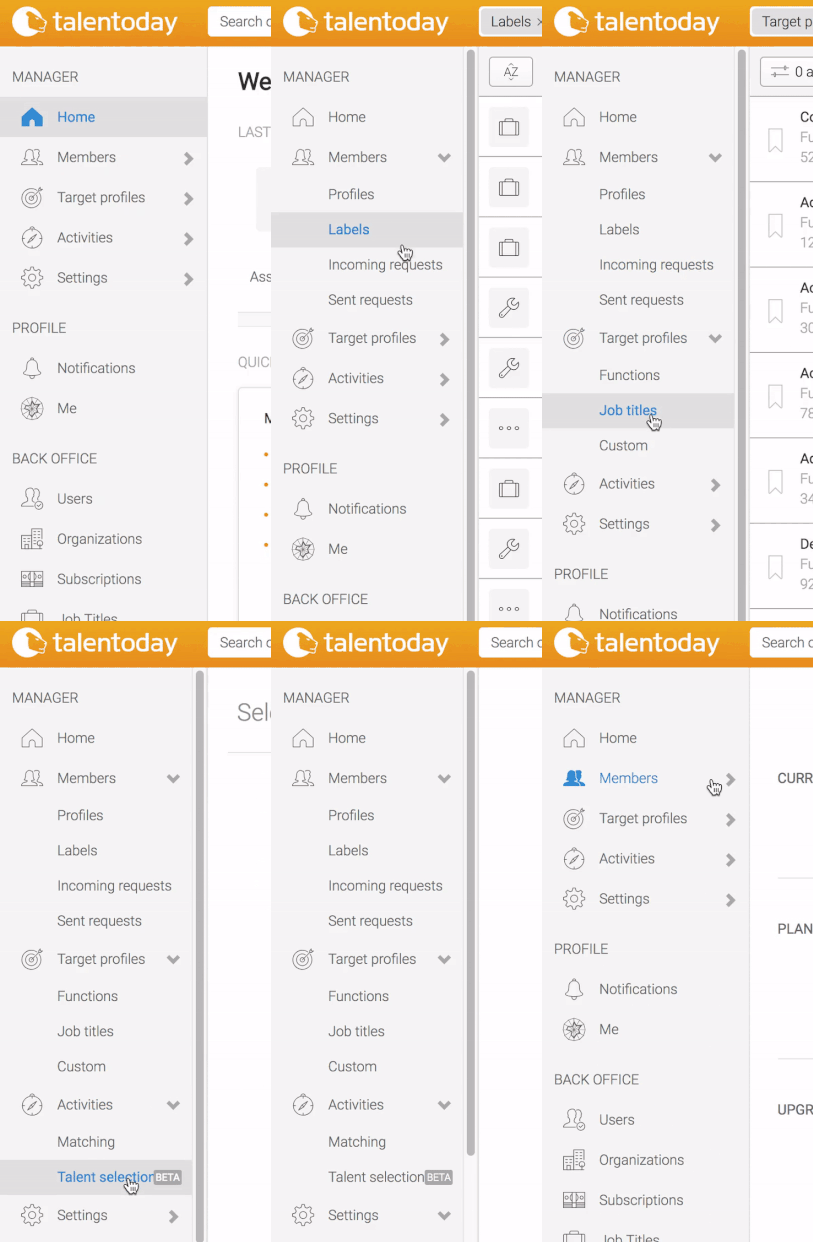
In a nutshell, your Talentobe Manager menu now features a homepage that showcases your last assessments and quick links for every available feature, which are distributed among 4 clusters : Members, Target Profiles, Activities and Settings.
1. Find your bearings
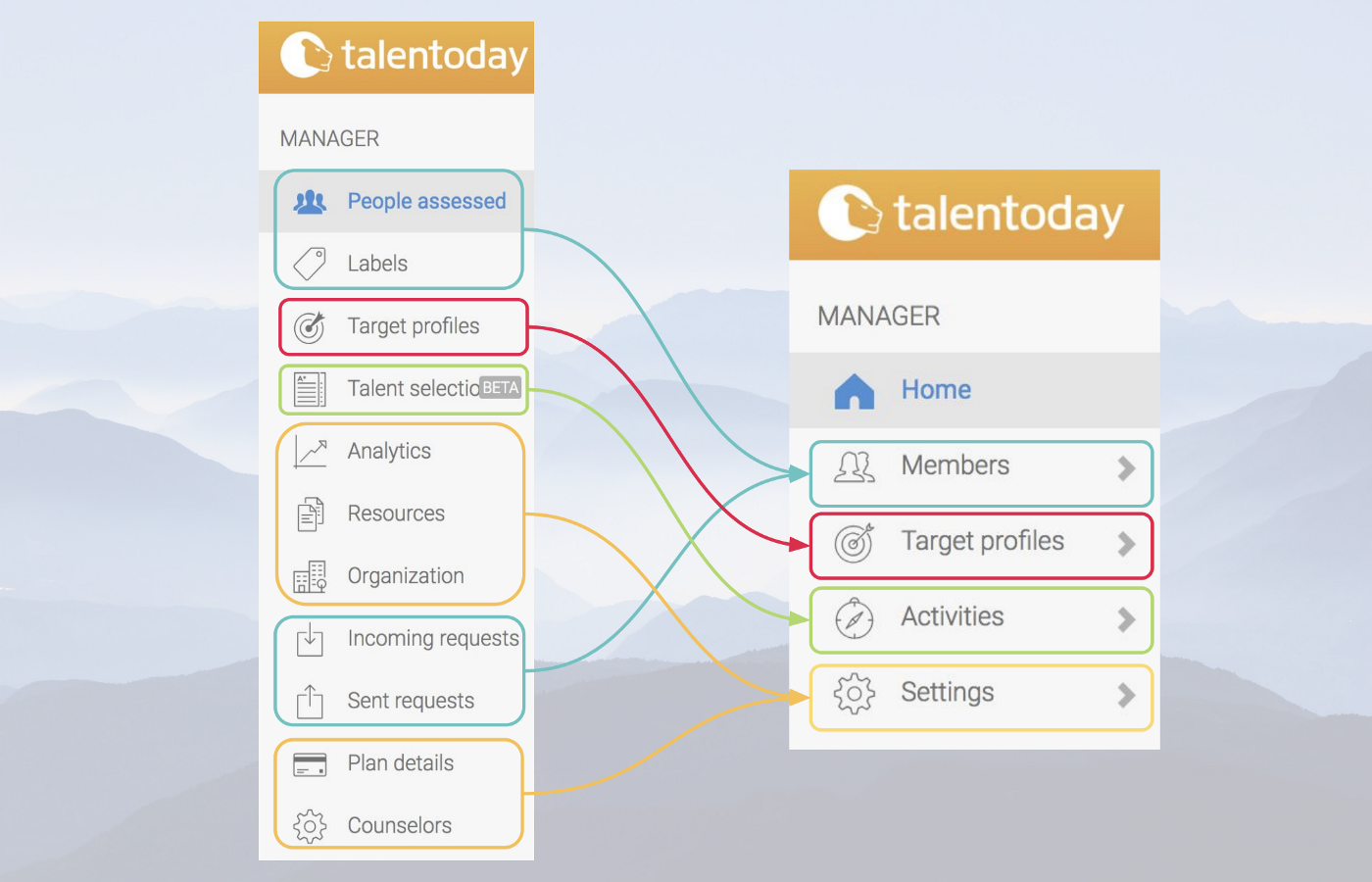
This new navigation bar is meant to reflect your real usage of the Talentobe app. As a result we’ve pooled all our previous features into four categories :
- Members : this is where you’ll see everything pertaining to the candidates you invited on talentoday. Profiles, labels, pending requests.. everything can be tracked there.
- Target profiles : they display the most significant differences relevant to a job, team, organization… that way the Talentobe target profile library and your custom profiles are always at your fingertips.
- Activities : an all new category meant to gather all the features derived from your target profiles and members’ data. This is where you will find our matching and talent selection features.
- Settings : everything related to your resources, usage analytics, organization and plan details can be found there.
2. Get a deeper look
3. New default avatars
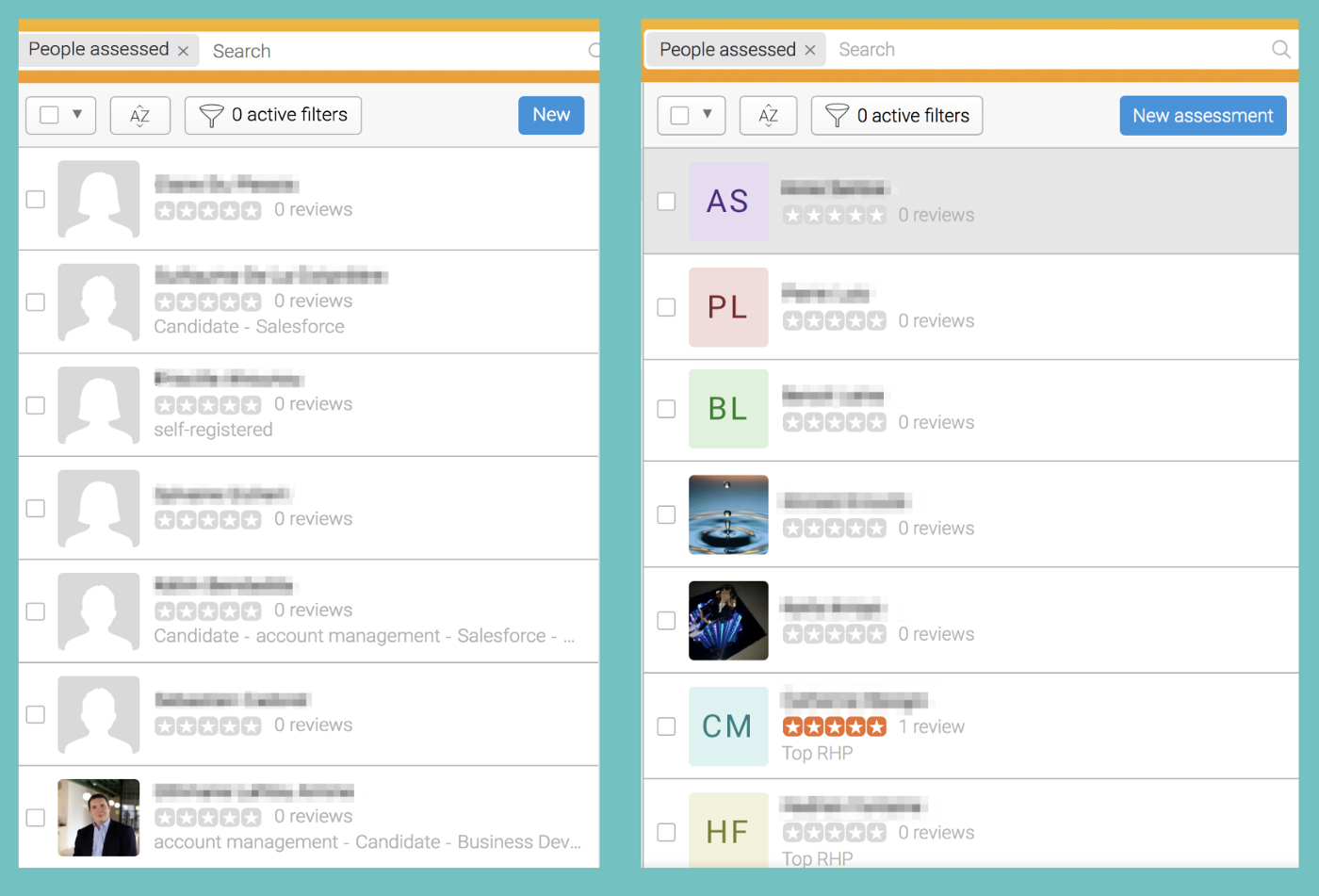
As an additional treat, we’ve decided to shake our default avatars up a bit. People who have registered on our app without adding a profile picture will now be assigned a colourful tile with their initials, instead of a grey silhouette. Enough to brighten up your Members tab!
The navigation and avatar updates are available to anyone with an active license. Renewing or getting your Talentobe Manager license will give you access to all these features and many more in the coming months.
Let us know what you think of these changes, we’d love to hear your feedback. If you have any questions, you can get in touch with us on twitter, facebook or mail.
2018 Outlook for Talentobe Manager
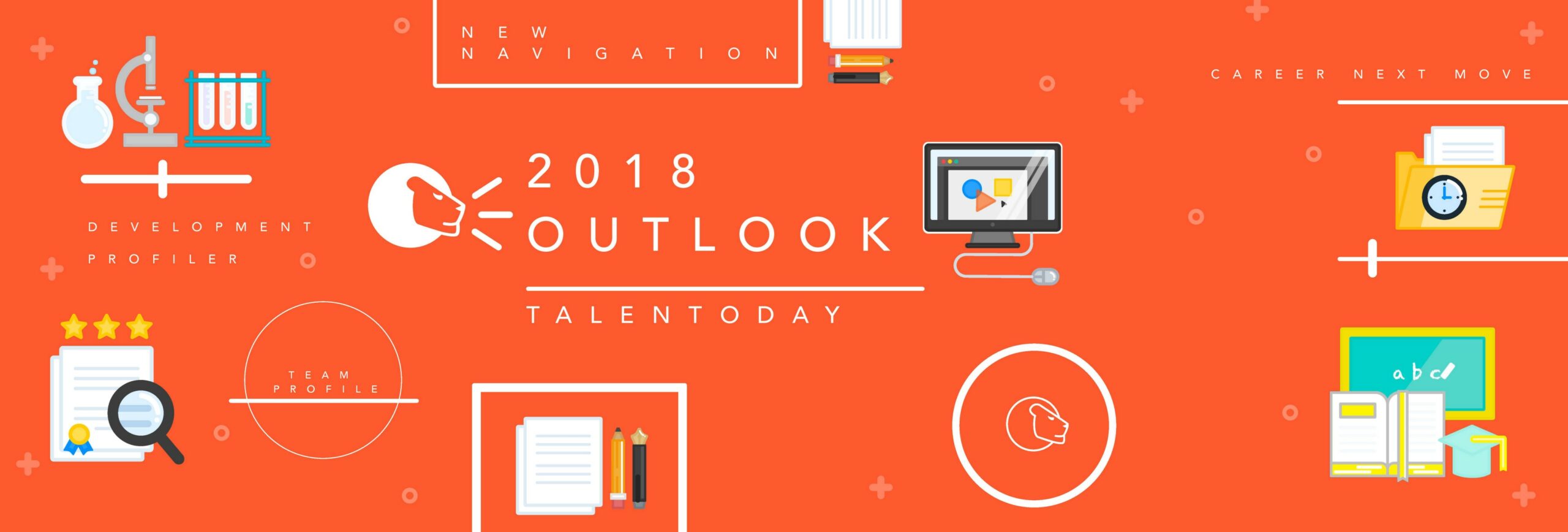
Talentobe is always looking ahead and continues to expand its features in order to help you make great decisions! Our 2018 roadmap is packed full of new ideas, which will revolutionize the way you look at employee development and mobility. Our interface will also receive an upgrade — get ready for a whole new Talentobe Manager menu design!
Here’s a list of just some of the things you can expect in the upcoming year:
1. Career Next Move
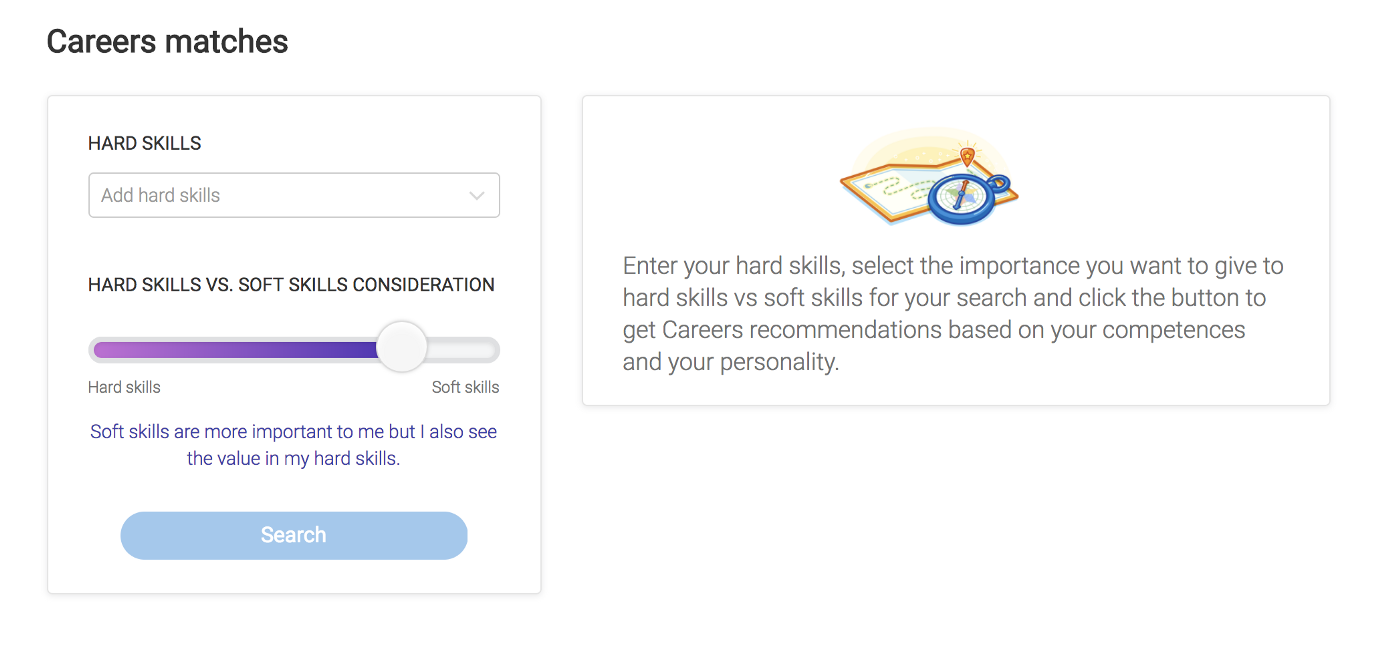
Career orientation, planning and mobility… Talentobe’s Career Next Move will put you on the track to even greater success at work by recommending career options based on your current soft and hard skills. Balance what you know with what you’re good at and what you’d love to do!
Whether you’re looking for a fresh start or you want to build on your current experience, this feature will allow you to match your hard and soft skills to your dream job!
2. Development Profiler
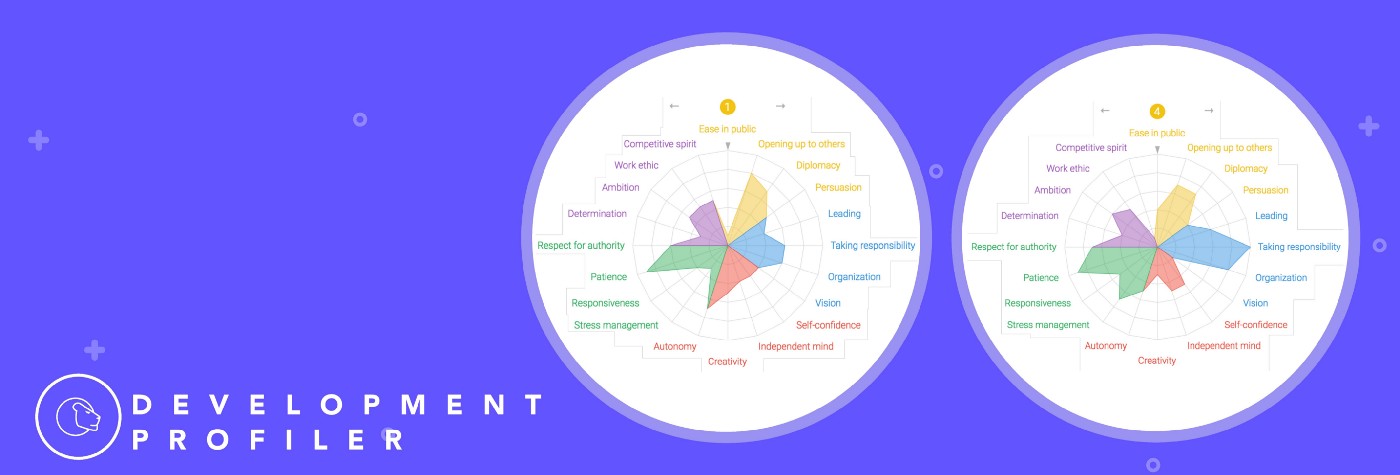
Have you ever wondered how your goals, behaviors and personality have evolved throughout your life? As your work responsibilities change and as life events happen, your priorities shift. The Development Profiler will allow you to track these shifts by displaying the evolution of your soft skills and goals over time.
3. Team Profile
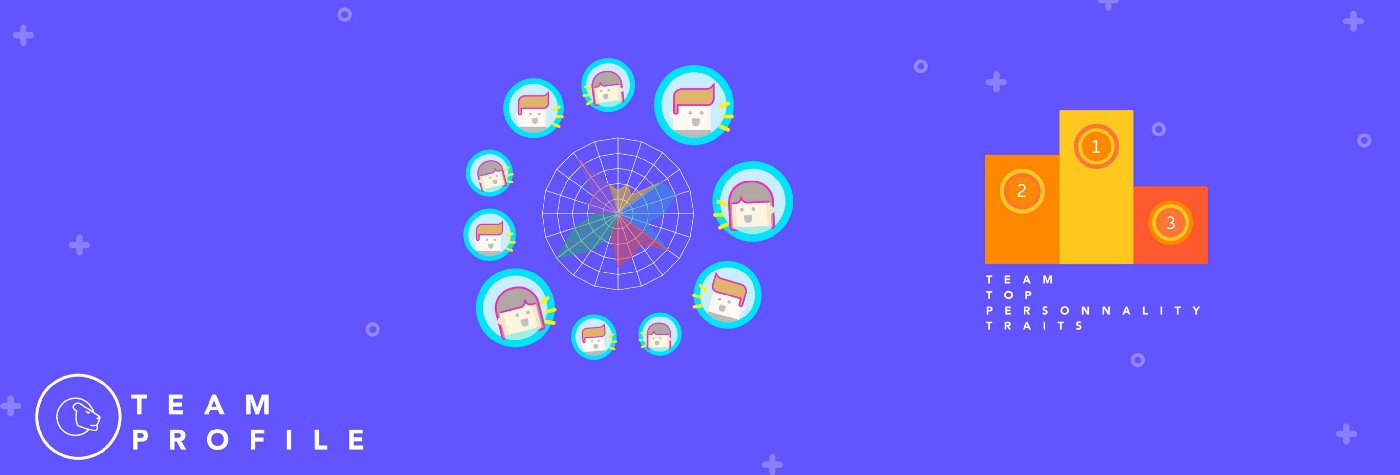
These days, much of the work in an organization is done collaboratively. As Aristotle said, “The whole is greater than the sum of its parts.” Discover your team’s inner workings, behavioral strengths and weaknesses, and bring the right people together based on their soft skills. This profile will help you to boost your team’s effectiveness, foster innovation and avoid interpersonal issues.
4. New navigation
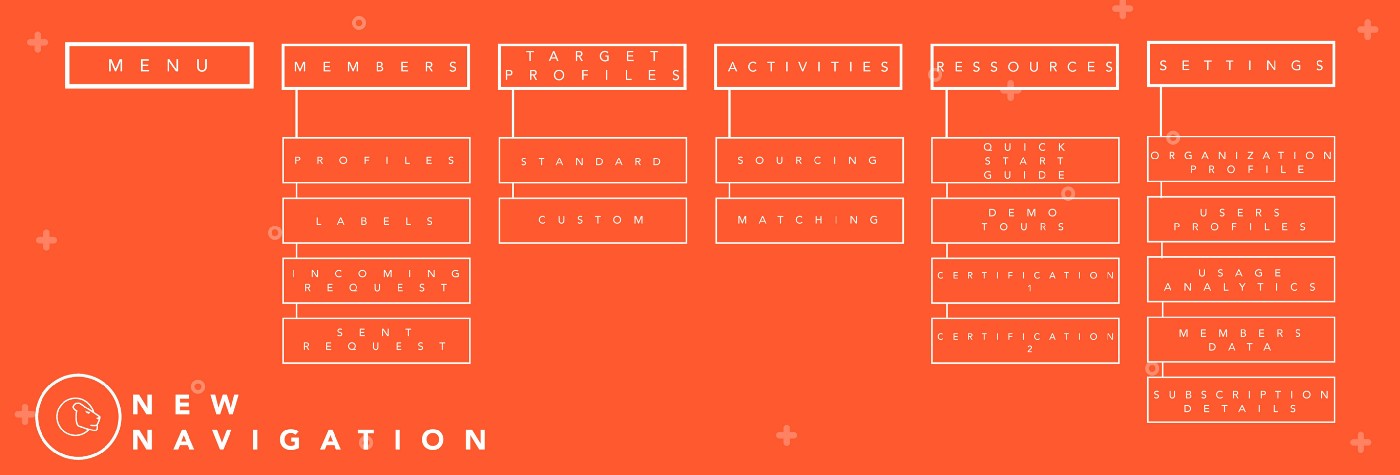
For a more practical and intuitive use of your Talentobe Manager, we’re planning on fully redesigning its navigation. The new menu will better showcase its features and uses.
Let us know what you think of those ideas, we’d love to hear your feedback. If you have any questions, you can get in touch with us on Twitter, LinkedIn or mail.
Talentobe Manager keeps changing for the better
2017 was a busy year for our Innovation and Development team! Thanks to your feedback and their hard work, the Talentobe platform keeps evolving and delivering new and useful features.
Here’s an overview of some of the latest innovations now available on your Talentobe Manager app:
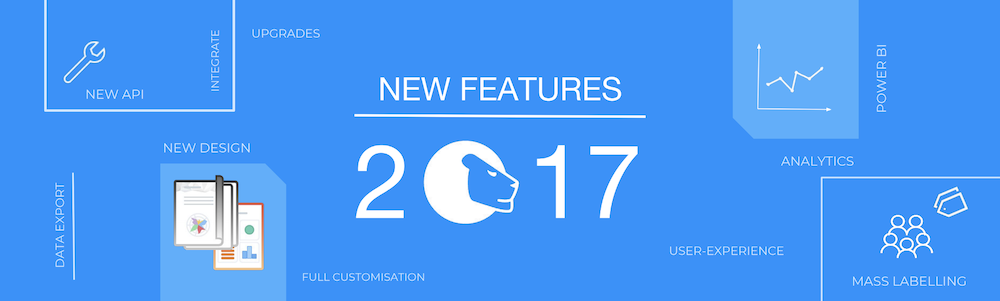
- Upgraded Reports: a new design and full customization capabilities are available for your Premium Development, Target Profile and Matching reports.
- Enhanced Labeling: The custom list filter further simplifies the mass labeling of your members.
- Improved Analytics: Individualized and branded Welcome Page links for your counselors, as well as powerful Microsoft Power BI dashboard and data export capabilities (into Excel/CSV) are now available.
- Extended Integration Capabilities: Complete or partial integration of Talentobe into your third-party HR tools is now possible, thanks to our Partners API and our embedded application.
1. New design and full customization of all reports
Our reports have a new look! You can now choose between the colorful Original Style and the smart new Classic Style, which provides the option of a sleek black & white modern look, and is perfect for more formal work environments.
With this choice of styles, Talentobe reports can be customized to better fit your or your client’s corporate culture. If you want to convey a sense of fun and vibrancy, choose the Original Style. If, on the other hand, you want to convey a more formal and refined feeling, the Classic Style is the best choice for you.
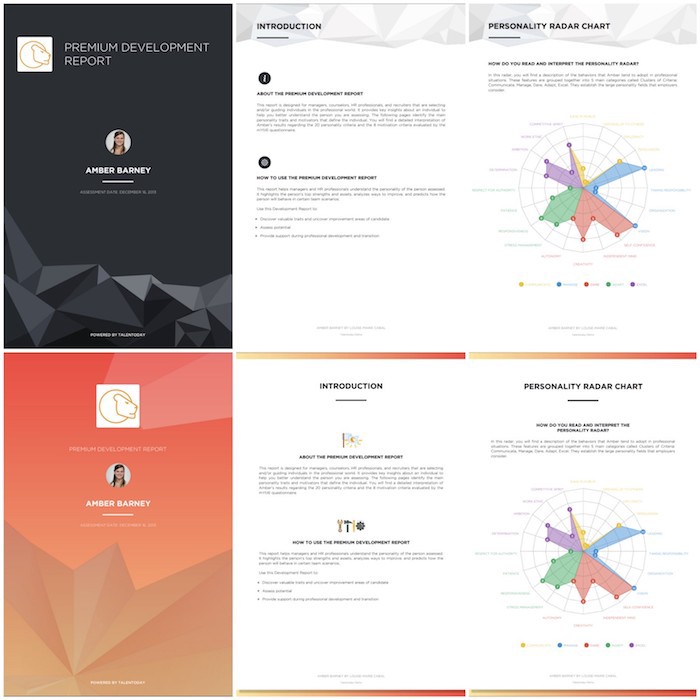
Either of these looks can be applied to all Talentobe reports, whether the Premium Development report, the Target Profile report or the Matching report, for a strong and consistent visual identity.
Last, but not least, you can now fully customize the Target Profile and Matching reports, just like you could with the Premium Development report. Just choose the sections you would like to include in your reports, according to your needs.
2. Labeling made easy
The labeling feature has also been revamped. Previously, you could choose between two ways to add labels to people: either pre-labeling them via the “New assessment” invitation box or manually choosing them one-by-one from the “People assessed” list.
This system works perfectly when you need to label a small number of people, but when it comes to mass labeling, it can become rather tedious. This is especially true when you use a Branded Welcome Page. Tagging a lot of people becomes cumbersome, since you won’t be using the “New assessment” invites. On the other hand, applying a new label to people you’ve already assessed can be time-consuming, since you’d have to look for them individually.
It is for this reason that we have simplified the process by creating the Custom List Filter.
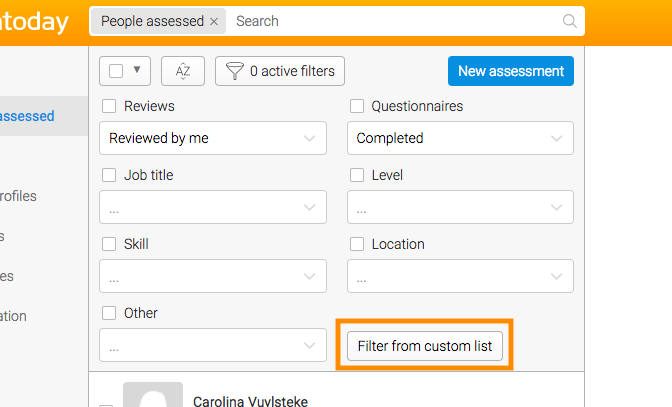
The Custom List Filter allows you to quickly and easily apply multiple labels to multiple people by letting our filter search your database for you! For instance, with the aid of a spreadsheet such as Excel, you can copy and paste the relevant email addresses and tag them with a simple click.
Don’t worry about accidentally missing someone. The custom filter pop-up window will tell you how many of your entries were found in your database.
3. Better analytics
Our Branded Welcome Page gave you the ability to alter the appearance of the Talentobe welcome portal by branding it to your business. However, tracking counselors’ activity was less manageable, since this page was linked to the account manager and not to each counselor. That’s why invitation links to the Branded Welcome Page are now specific to each counselor, allowing for an accurate analysis of your use of Talentobe.
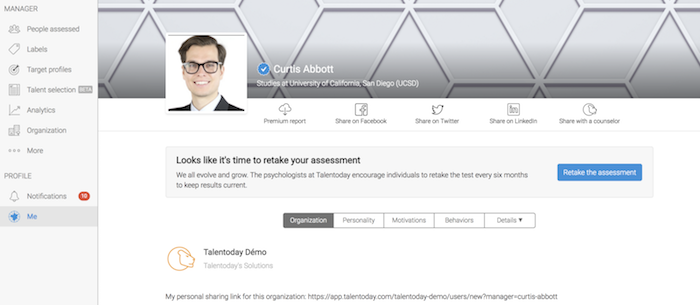
Some of our clients needed their data for statistical purposes or for reporting to other people in the organization. You can now export all your Analytics Data into a CSV file.
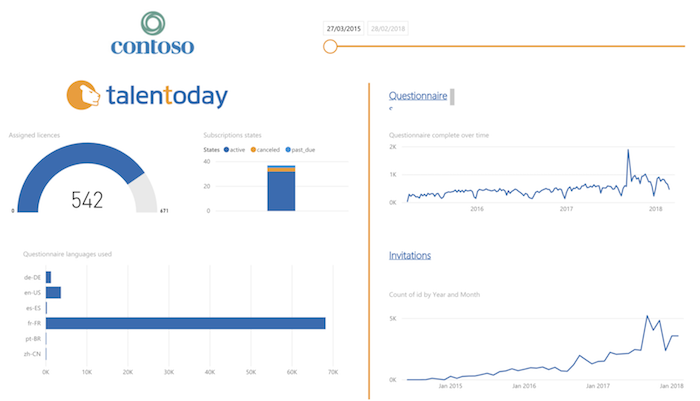
Do you need even more data, more detail and in real time? Ask for a custom dashboard! Using Microsoft’s Power BI technology, you can have access to a wide range of new information, such as the number of questionnaires completed over time or the most active counselors by branch. It allows you to perform a thorough analysis of all your Talentobe data.
4. Integrate Talentobe with your HR tools, thanks to our Partners API and embedded app.
Whether you want to incorporate a light version of Talentobe into your third-party HR applications, or completely integrate the Talentobe app (assessment, results and data included), everything is now possible with our Partner API and our new embedded app. Facilitate account creation by automatically populating the registration form with info from your HR tools, and assess your candidates without making them leave your website.
Click here for a more detailed explanation
As you can see, Talentobe continually strives to give you the best customer experience, and will keep changing for the better.
Up next: The innovative features we’re currently working on, which will be launched in the coming months!
Let us know what you think of these changes. We’d love your feedback! If you have any questions, please contact us via Twitter, Facebook or email.

Talentobe within your application!
In 2017, we saw an increase in the demand for integrating the Talentobe assessment process and results into third-party applications. These apps range from traditional digital platforms in the HR industry, such as HRIS or job boards, to more unconventional ones, such as freelance management software platforms. In this blog post, we will explain how integration is offered for partner apps, and how we can provide a fully unified and seamless experience for their users.
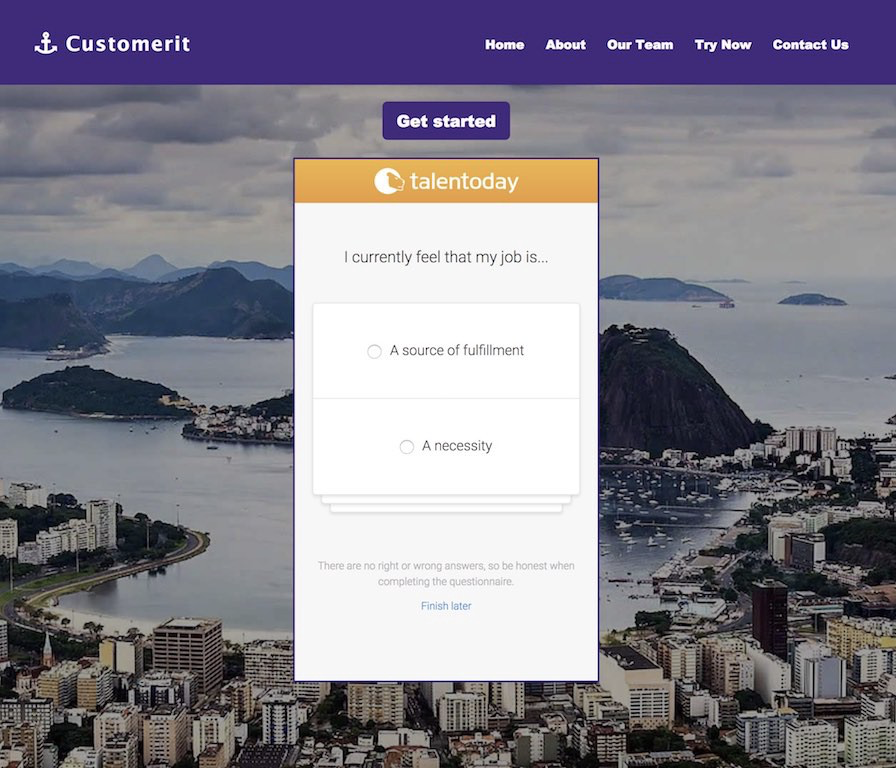
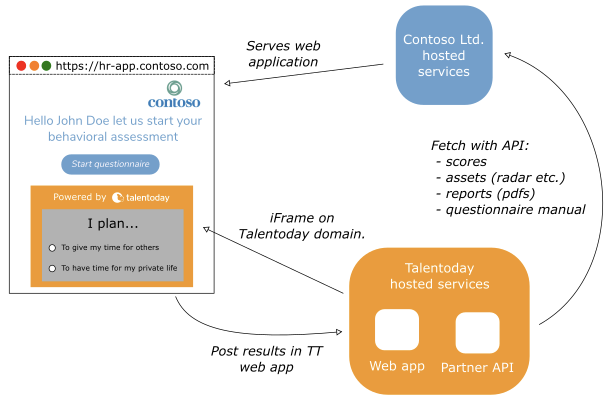
We are proud to announce that you can now easily integrate mYti© questionnaire in partners eco-system. The necessary toolkit has been released, and leverages two new key components:
- The Talentobe Partners API v1.1
- The embedded iFramed light application
The Talentobe Partner API v1.0 was released in January 2018. It has been designed, implemented and documented following the OpenAPI Specification. The purpose of the API is to take psychometric results of the organization’s members, and allow the programmatic distribution from raw data to consolidated reports. The users of this API are designated by the term “partners”, and are made up of existing customers of Talentobe Manager©, as well as partners from other applications where more value can be gained through the integration of a soft-skills component for their users. For example, this API allows you to list the organization’s members (a.k.a. people assessed). Thanks to webhook capabilities, the partner application is notified whenever a member of this organization completes the questionnaire, etc. As mentioned above, the Partner API allows the partner’s ecosystem to retrieve assessment scores and the resulting spider charts for personality traits and motivations, as well as structured PDF reports.
The iFrameable light application is a tactical way to integrate the Talentobe experience into your app. Specifically, the iFrame code is similar to the codes you can find on Youtube’s “embed” sharing code. The light mode application allows a person to sign-up for Talentobe services, and take the psychological assessment without leaving the partner app. Of course, members are still able to access their Talentobe account in the regular application on https://app.talentoday.com.
Leveraging the API will allow the partner to integrate personality results or any related material, such as spider charts, reports, etc. into their own web app, providing their users with a 100% integrated Talentobe experience.
Interested by integrating Talentobe? Email us at contact@talentobe.com
We’ve improved our technology!
At Talentobe, we are focused on continuous improvement and in order to offer users with a more intuitive representation of candidates’ and employees’ Target Profile matching scores, we have slightly altered the science behind them. The new technology provides actionable data that is easier to understand and analyze.
We have improved our algorithm for our clients and in turn enhanced our performance. Our new method for computing the matching score allows us to be consistent with the matching visualization. This change allows for the following:
- Easy to understand matching score and improved analysis process.
- Users will know which criteria are the most essential because the criteria are now numbered in order of importance.
- Increased value for our candidates and employees, who will now be be able to better understand the the skills that are most important in their current or future role.
Matching Score vs Matching Visualization: How they come together
The matching score was initially built by taking into account the 28 criteria scores we measure at Talentobe. In comparison, the matching visualization, based off the Target Profile, considers the 8 most predominant criteria for the targeted population. This technical decision was originally made to obtain a matching score as precise as possible, which takes into account the subtle variations provided by the whole pattern of criteria scores. Because the score was measured against 28 criteria and the visualization on 8 there was some unneeded discrepancy.
To simplify things, we will now compute matching scores and matching visualizations based on the 8 predominant criteria from a targeted population. This will then ensure that we have matching scores that are consistent with the matching visualization. This is achieved through a proximity calculation, i.e. the matching score computation is only based on the 8 most predominant criteria previously identified by our machine learning algorithm.
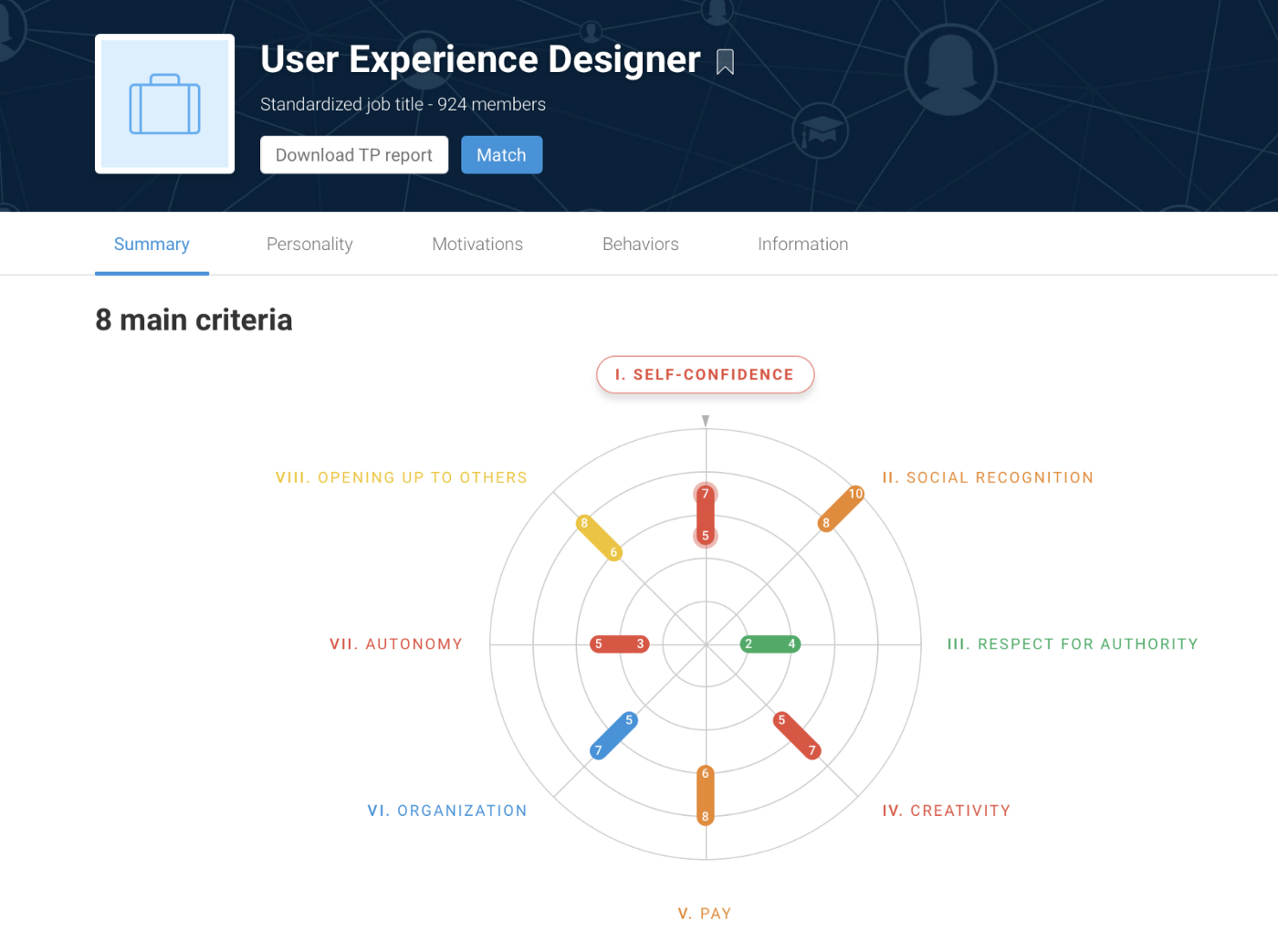
Another cool aspect of the new technology is the numbering of criteria in order of importance. Recruiters and managers can now easily pinpoint the essential criteria for a given role which can aid in the final decision making process.
If users experience questions we would love to chat. Please feel free to reach out to our support team. With this positive technology modification, some changes in matching score are to be expected.
This update will make the peoples’ experience more consistant and intuitive without changing users interaction with our platform.
We have much more to come as the year draws to a close. Our roadmap is packed with new ways to make our customers lives easier, and we look forward to sharing these with you soon.
For more information on other recent releases feel free to check out our blog. As always, your feedback is so important to us. If you wish to share and get in touch with us, give us a shout out on social media!