



Psychometrics: unleash your superhuman talents

Psychometrics. Sounds like something out of a lab experiment, right? Someone in a hospital gown hooked up to wires that monitor brain waves?
No, it’s not a scene from Stranger Things. It’s cutting-edge technology that when mixed with a powerful algorithm, is changing the game in human resources, online advertising and customer experience.
By definition, psychometrics is the science of measuring mental capacities and processes. Algorithms and predictive analytics are used everywhere from Facebook to Amazon measuring behavior as an indicator of content preferences and buying habits. But now we are seeing this technology used in a brand new way.

Talentobe’s personality questionnaire and underlying algorithm leverage psychology and data science to discover someone’s unique personality traits and motivations. What makes this test unique? Talentobe was born out of in depth research done by top psychologists and will not place you into a Myers Briggs box — it is the only one of its kind in HR.
Talentobe for Hiring Managers & Recruiters:
The real psychometric magic happens when the behind the scenes computing is combined with a simple (& free) online questionnaire that was designed with busy professionals, like you, in mind. It can be accessed on any device, includes short and easy to comprehend questions, and takes an average of 11 minutes to finish.
While the questionnaire goes in depth, you do not need a Ph.D to understand the results. Assessment information is presented in an easy to read format, allowing hiring managers to make data-driven decisions about potential employees rather than relying solely on gut instincts developed during interviews.
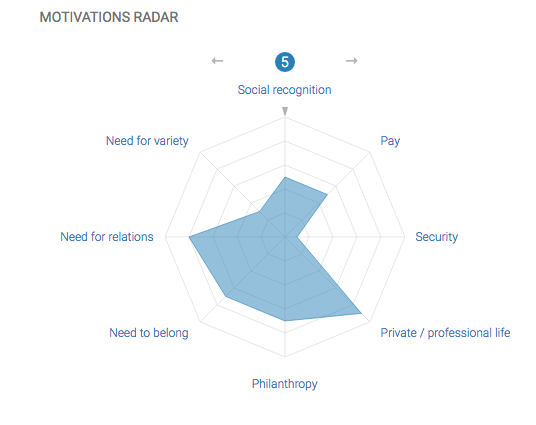
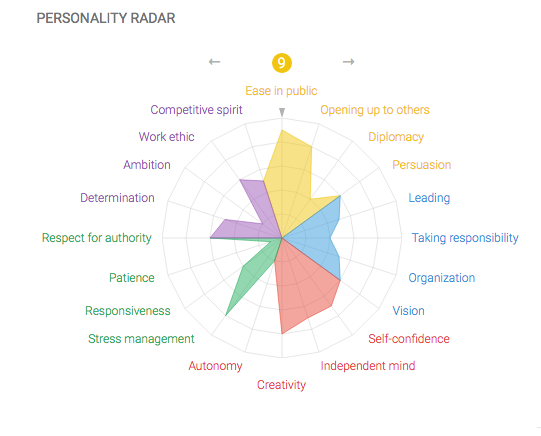
To get even more out of the reports, Talentobe offers a certification program that will show you how to review results at a deeper level. One member of a hiring team or HR office can become an expert and share their knowledge with the rest of the team.
With a deeper understanding of a candidate’s personality, companies can more accurately know how a candidate will fit the job description and office culture, which will lead to a higher rate of a successful hire and increased employee retention long term.
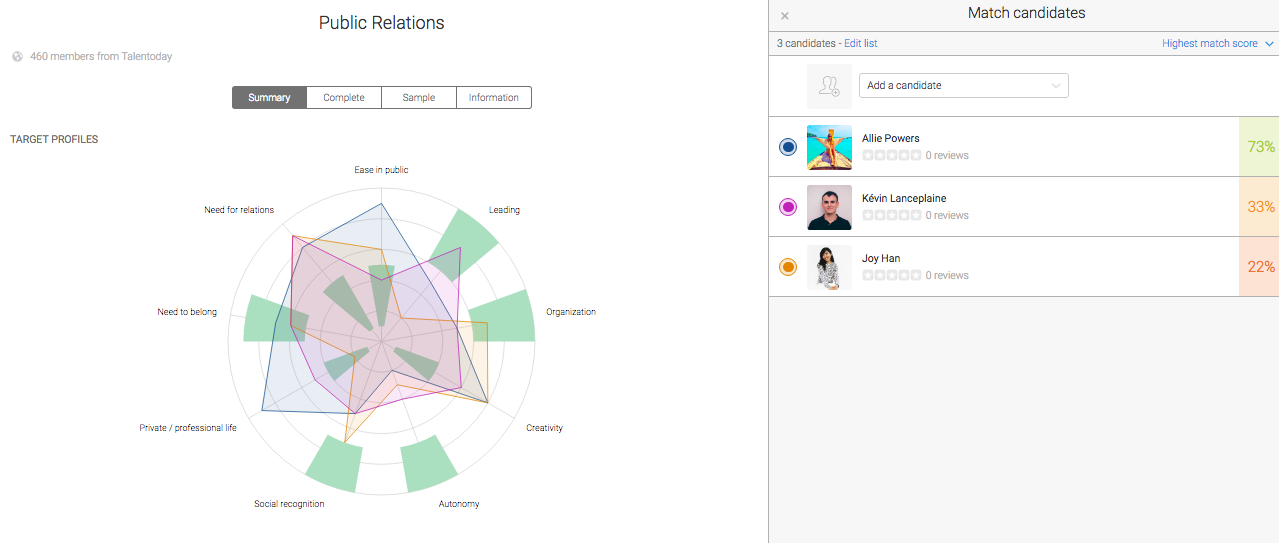
HR offices and staffing agencies can also use the target profiles created from Talentobe’s growing database to match their incoming candidates to. The job matching system (above) shows managers if the candidates meet the essential criteria — reducing the risk of hiring a bad fit and saving time in the process.
The whole thing is built to scale, and can be customized to fit any organization’s needs.
Talentobe for the average joe
On the other side of the house, candidates now have full access to their superpowers. Score a 9 in creativity? Time to play up your best qualities in your next interview and land the job you have been eyeing the first time around. The company also offers career recommendations in a comprehensive PDF report and includes interview questions to help you prepare.
Want to learn more? Try the free personality assessment for yourself. You’ve got nothing to lose and only insight and data to gain. Unleash those super powers folks!
Curious to hear more HR & Recruiting tips? Check out additional articles. And if you like this post, please hit the ❤️ button below or give me a shout on Twitter.

Hit a Hiring Road Block?
3 Powerful Tools for Recruiting the New Generation
This is the era of the Millennials, a generation that, according to the United States Census Bureau, represents more than one quarter of the United States population and is the largest population in the United States today. Take Google’s headquarters, for example. When you walk onto the campus the first thing you see are young adults bustling between the buildings. It looks almost like a busy college campus.
As more of today’s students graduate and enter the job market, recruiters must learn how to attract them and HR teams want to be sure their new recruits will stay motivated when joining their company’s workforce. If companies want to compete with the Googleplex, they need to make their hiring process more effective and their job offerings more alluring to new hot candidates. The challenge is creating a process that is enticing to the interviewee and informative to the company while still remaining bias free. Hiring a millennial will look much different than hiring from previous generations but luckily there a few nimble start-ups dedicated to making this process a success.

Three Powerhouse Recruitment Tools
While it is the era of Millenials, it is also the era of new tech tools. As the candidate pool has evolved so has the technology. HR teams have adapted the following hiring solutions to their recruitment process to help them make more informed decisions.
- Greenhouse companies like AirBnb, Pinterest & Vimeo have successfully implemented this new software that optimizes the entire recruiting process. With Greenhouse, you can find better candidates, conduct more focused interviews, and organize the recruiting process from start to finish. Experienced interviewers don’t wing it. The interview process should be a powerful marketing tool. You want every candidate to walk out of their interview feeling impressed by your team and excited about your company. Greenhouse provides all the tools you need for powerful, structured interviewing.
- Talentobe is a HR portal where people seeking jobs can take a simple & informative questionnaire that analyzes people’s personality and motivation at work The psychometric technology leverages Talentobe’s growing 3.5 million global database of detailed personality assessments. The companies secret weapon is their job matching platform which allows you to match candidates to Job Profiles in the industry to quickly see if you have a good fit. It has a slick, modern interface and is integrated with social networks such as Facebook, LinkedIn, and Twitter, making it very appealing to this new generation.
- Interviewing.io on the other side of the house is this quickly growing company that allows engineers to skip the bullsh** and get right to the technical stuff. Hiring engineers? You can now talk directly to engineers who’ve been killing it in technical interviews. With their unique approach candidates who do well in practice, get invites to interview anonymously with great companies. That means Millennials can skip right to the technical screen without talking to recruiters, touching their resume, or worrying about bias. If you have the skills you get the job, it is as simple as that.
With these tools, a the recruitment team will be one step ahead for their candidates, providing them job opportunities that better fulfill their needs and life goals, while saving the company precious time with a more effective recruitment process.
Embracing These Modern, Powerful HR Recruitment Software
The population of job applicants is continuously changing and a new generation is entering the workforce with very different expectations and attitudes. HR teams will become better at understanding this evolution and select candidates that better fit their company, or lose top candidates to other companies who are catching on.

“Digitization, social networks, big data, and machine learning are disrupting the staffing and recruitment industry and the future of professionals hinges on the ability to understand, interpret and embrace data” — Alberding Group
Adapting new tools that combine recruitment planning, people analytics, machine learning and the latest advancements in psychology will allow companies to attract new generations of job applicants who will remain productive and committed to their job.
Curious to hear more HR & Recruiting tips? Check out additional articles. And if you like this post, please hit the ❤️ button below or give me a shout on Twitter.

How to hire a super star sales professional.
3 unique traits in those who close deals
A great product or service can easily go unnoticed if it does not have the right people to sell it. As a hiring manager, how can you find sales stars that shine? With thousands of sales professionals in our data base, we have created a profile on what makes an individual a great deal closer — & it is not what you may think. According to our data, top sales performers display the following traits:
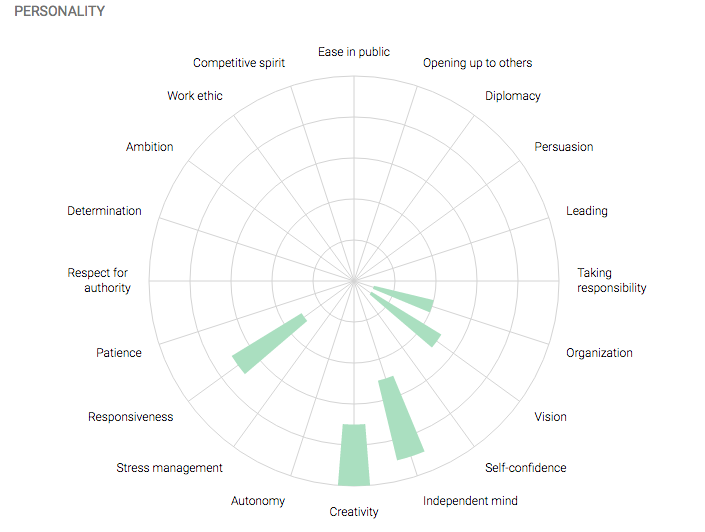
#1 Creative: Lives (and thinks) outside the box
There are many ways to sell a product or service, and the same approach is not right for everyone. Creativity is often required to take a customer from “maybe” to “yes” and close a deal.
A successful salesperson thrives in an environment where they need to constantly adapt to changing goals and creatively solve problems on a daily basis. You don’t want someone who sometimes thinks outside the box, you want someone who doesn’t know that the box even exists.
#2 Responsive: Intuition based decision making
Have you ever felt like the car salesman down the street read your mind? Well, they did. Salesmen/women rely so heavily on their intuition that they can easily get in their customers head and are usually two steps ahead. Genuine sales professionals are quick on their feet, and favor spontaneous action over reflection.
But while they are quick they are also swift and can adapt to a new situation at the drop of a hat. Their chameleon like nature allows them to respond to the personalities of a rainbow of potential customers.
Team members who have mastered the art of clear and consistent communication with their clients will lead your company to higher customer satisfaction, and a better bottom line as a result.
#3 Independent mind: Supervision not required
A rockstar salesperson should be able to take a goal and run with it. That means setting their own schedule and ensuring that all relevant goals are met on time.
Self motivation is crucial, especially in environments where sales reps work remotely or travel frequently. Managers should be able to support their teams without getting in the weeds on day-to-day details.
The total superstar sales package
The key to making a sale is understanding customers’ needs and figuring out how your product or service can meet them — the intersection of creativity, responsiveness, and independence. Find someone who has all three and you are well on your way to success.
While every employee is unique, these insights may help you determine which applications rise to the top of the pile. For help hiring your next sales professional use this job matching system to see how your candidates stack up against your current sales team. Stop relying on your gut instinct for hiring (leave that to sales) and start making data-driven decisions.
Want to read more recruiting tips and tricks? Check out my blog page.
The future of recruiting: how to save time, money & stress.
How to Save Time and Money in the Hiring Process.
On paper, the candidate seemed great. But as you stare across the conference table at his disinterested, glazed expression, you wish you had a Doctor Evil button to press so you could watch his chair get swallowed by the floor. You’re a professional, though, so you finish your interview and politely escort him out after a wasted hour. What went wrong? He seemed amazing from his resume!
The average recruiter spends nearly 40 hours and over $1,000 to hire someone (1). And hiring the wrong person can cost a company more than $50,000 in lost productivity(2)! Companies don’t just have to handle replacement and re-training costs of the employee that didn’t work out, but a mismatched employee will affect the entire team’s morale as they scramble to get that person’s work done. In 2012, 22% of recruiters reported that the reason for their bad hires was because of “insufficient talent intelligence.” Issues and personality traits came out after hiring that the recruiter didn’t expect. Recruiters in today’s fast paced quota-filling atmosphere have a limited amount of time to get to know candidates extremely well. Efficiency is critical.
So how can recruiters speed up the process and hire the right talent the first time? Using psychology-based testing prior to interviews can give recruiters important insight into a candidate’s personality. Most of us at one time or another have taken the old-school, popular “Myers-Briggs” test and gotten the four-letter acronym that “matches” us (a.k.a. tries to fit us into convenient little boxes) — any other ENFJ’s out there? But that test was researched and developed in the 1940’s!
Today, recruiters need to understand what drives today’s workforce, and more importantly what motivates them at work. Instead of being placed in a generic box, recruiters should be able to match candidate’s traits and motivators with the team and the company’s unique culture to see if they will make a good fit.
Using a modern psychology-based tool like Talentobe Manager, that was developed with the traits of today’s workforce and the uniqueness of your company in mind, means you have personalized insights by professional psychologists! Really knowing who your candidate is, what motivates him or her, and how he or she will fit on a team, in a role and at your company — before they even come in to interview — will save countless hours and dollars interviewing, negotiating, and potentially re-hiring
And you won’t need your Doctor Evil button after all.
Want to read more recruiting tips and tricks? Check out my blog page.
Sources:
- GetHired.com as reported on http://theundercoverrecruiter.com/wp-content/uploads/2012/06/how-much-hire-graphic.jpg
- http://www.careerbuilder.com/share/aboutus/pressreleasesdetail.aspx?sd=12/13/2012&id=pr730&ed=12/31/2012


HR Hack: The Secret to Tying Down Millennials.
Where will all the grads go?
And more importantly, will they stay put? Nearly two million members of the Class of 2016 in the U.S. have hit the job market this summer, and the outlook is strong.
A survey from the National Association of Colleges and Employers finds that employers are planning to hire about 5 percent more new college graduates than last year, and the Bureau of Labor Statistics reports that the unemployment rate for those over 25 with a bachelor’s degree is 2.4 percent, less than half of the national average of 5 percent.
While the job outlook is strong, Millennials are looking for more than just a job — they want a career that they are passionate about. And they will not settle for anything less.
Millennials have different needs than previous generations.
According to a study from Bentley University, “Millennials have not rejected the corporate world, but they will seek other options, such as starting their own companies, if they cannot find workplaces that accommodate their personal values — prominent among them time allocation, relationships and job security.”
How to attract the best Millennials to your company
In order to recruit and retain Millennials, you first need to understand their needs. It is essential that companies invest in their candidates from the very beginning… and that means getting to know them — inside & out. This generation has been described as everything from self absorbed to free spirited.
While making sense of Millennial preferences might seem like a tall order, a simple personality questionnaire puts it within reach. HR managers and recruiters can now use a psychometric assessment to uncover a person’s motivations, leadership style, and more.
This is a vital resource for understanding the mindset and strengths of today’s college graduates. I reached out to a recent grad who was on the hunt for a job she could invest herself in. As a millennial in the tech start up world, Addison wanted to see just how accurate this assessment was at gauging her unique needs.
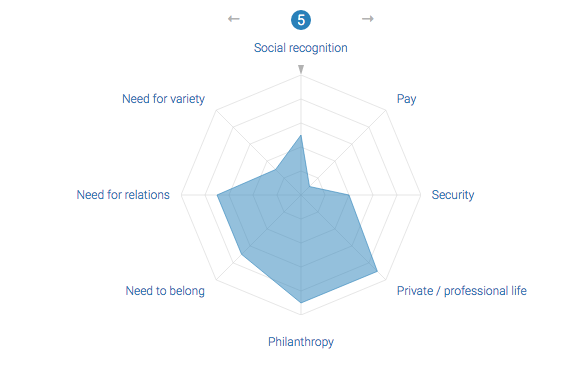
Addison noted, “my motivation radar was spot on. Without relating to others on my team coupled with a strong work life balance, there is no amount of money that can keep me happy at a mediocre job.”
But these are just Addison’s unique results, employers must find ways to meet expectations of the new generation’s vast and diverse motivators.
Investing in employees is more important than ever, especially if your company plans on retaining them. To get a better idea of what a millenial will need to be a glowing and fulfilled asset to the team; it is best to do the extra work during the interview process, or you may see them heading for the door.

Are you in the wrong job?
How using your personality strengths leads to job satisfaction.
You have a job, but is it really the job you want?
Sure, you may get along with your coworkers and feel fulfilled by your work at least some of the time, but you still can’t resist checking out job posting sites or asking around about potential openings at happy hour.
You are not alone. It’s easier than ever to apply for jobs, network with companies and recruiters, and work from the comfort of home or your local coffee shop — meaning that workers are changing jobs more often than ever.
According to the Society of Human Resource Management, about one-third of new hires quit their jobs after six months, and CareerBuilder reports that 32 percent of employers expect their employees to job hop.
Some who leave jobs find that the grass isn’t always greener on the other side, beginning another cycle of job searching. However, a new wave of data-driven hiring is making it easier for companies and employees to find long-term matches.
If the employee’s personality fits with the company, chances are the employee will stay longer. And, companies are using personality data to understand the roots of human behavior and how to shape their businesses accordingly — a strategy known as people analytics.
They know your buying habits and can compare them to similar consumers to suggest new products for you, predict future behavior, or improve customer service. Entrepreneur reports that the Container Store is doing just that by using wearable technology to track employee interactions with customers on the sales floor.
People analytics applies to hiring, too. Search committees and sorting through endless stacks of resumes to arbitrarily pick a candidate may soon become a thing of the past in favor of data-driven placements that match a candidate’s personality with the open position and company’s culture.
There are many options out there when it comes to online personality assessments, but not all are created equally. Talentobe’s personality test was specifically designed for a professional setting. The questions are no longer than a Tweet and each has only two possible answers. They fly by and the entire thing can be completed in just a few minutes.
Are you a leader or a follower? Are you open to new assignments and challenges? How comfortable are you speaking in public and interacting with others you don’t know? The psychometric test gives you answers to those questions and uses a scientific algorithm to provide you with the career advice you have been yearning for.
The answers from your personality test can be shared on social media or with recruiters who can place you into jobs that fit your skill set and puts you on the path toward a long-term career in that field — minimizing the potential that you’ll be job hunting again in six months or a year.
Before you hit the job board next time, consider taking a personality test to find a long-term career that motivates you and uses your strongest traits to your advantage.

The Importance of Company Culture and How to Hire the Right Fit

6 tips on hiring employees who wont run for the door.
Everyone likes to wake up wanting to go to work! And every company wants their employees to be motivated, productive and loyal. One of the biggest factors in fostering a hard-working, happy team is by not only creating a vibrant company culture, but also making sure new employees fit into your company’s unique style. Whether your company is a more casual, “8–5”, family friendly environment, or a high pressure, career lifestyle, competitive, highly results-oriented workplace, using smart recruiting tools like predictive analytics to evaluate candidates will help ensure the perfect match.
Programs that foster company culture like flex time, happy hours, volunteer work, recognition opportunities, cross departmental “lunch and learn” events, competitive pay structures and opportunities for bonuses all make employees less likely to take calls from other companies.

“Culture is the number one contributing factor to every single aspect of the employment relationship — from both the employee and company perspective,” says Amber Rhoton, Owner/President of Owner and Chief HR Advisor for Amplified HR. “A strong culture is the fastest way to weed out under-performers and cultivate superstars.”
Here’s how to find the perfect match for your company’s culture and avoid costly hiring mistakes. Job searchers, listen up to increase your chances of getting hired!
- Ask candidates to take a personality test such as Talentobe’s which in a few clicks provides a comparison of the candidate to your current workforce and is designed to allow you to get an idea of who a person really is and what motivates him or her.
- Have multiple people speak with the candidate to see how well he or she meshes with different personalities. Also, meet a candidate on several occasions on different days and times to gauge the consistency of the fit.
- Watch how a candidate interacts with the receptionist. It may seem minor, but you want to hire a genuinely nice person. If someone is cold or rude to the person they are first meeting in the lobby, it’s not a good sign.
- Check references, and not just the ones a candidate gives you. Dig a little deeper and find an objective opinion on someone’s past performance and potential fit. It’s hard work but will pay off to avoid hiring the wrong person.
Observe how smoothly offer negotiations go. If a candidate negotiates heavily and isn’t easy to work with during that process, it’s a sign they aren’t the right person for the job. - Ask the hard questions. If you know your company’s culture requires night and weekend work, find out how a candidate will handle that. Be transparent on all the down sides of a position and when someone is still excited to join, you’ll know they’re right for the role.
“Match your applicants with your culture and the rest will fall into place,” says Rhoton. It’s way more important, in my opinion, than skill set or experience.”
By ensuring your new hires match your company’s dynamic, you’ll not only reduce your turnover but also increase engagement and overall performance of the entire team. And with today’s easy-to-use candidate-culture matching technology, there’s no excuse not to!
What’s your management style? Infographic with women vs. men comparison
One day we may all be promoted to a management position. Experience and career advancement push us towards positions with more responsibilities, so what kind of managers will we be? Depending on our personalities, we will adopt different types of attitudes and behaviors.
A leader’s personality varies widely. In fact, there are as many different ways to manage people as there are people on earth. Management style is the result of the manager’s environment as well as his or her true character. In order to be most effective, the style must be adapted to each situation*. Adopting the same behavior for each situation could be a real problem for people leading teams and projects.
Paul Hersey and Kenneth Blanchard proposed a typology of 4 main management styles. To understand the different types, we need to take various factors into account, such as the natural tendency to lead of the people, or the manager’s ability to open up to other people’s ideas.
Let’s take a look at the four types introduced by Hersey and Blanchard, and how they can exist in the workplace:
- Autocratic Management: The manager makes decisions within the team, acting as an example for others. Especially in times of stress, employees may enjoy working with an autocratic leader. They may enjoy being told exactly what to do and having someone step up, take initiative, and take control of the situation. This management style can be especially effective when decisions are needed on an urgent basis, but can be somewhat stressful for some employees when the added pressure plays against them, hindering their performance and the overall atmosphere in the workplace.
- Paternalistic Management: The manager devotes time to pedagogy, taking the time to explain decisions and coach the team. In this style of management, the relationship between leaders and their employees is similar to the relationship between the head of a family and the members of the family. The manager in this sense is guiding and protecting his employees as if they are members of his own family. This approach can be difficult when used with senior professionals, who may not like their own interests looked after so attentively. Instead of gratitude, it may bring about resentment among senior-level employees, so may be a more successful style for use with entry-level employees who are in need of a more hands-on approach. The relationships between these coworkers and their leader are extremely solid.
Democratic Management: The manager encourages the participation of the team and includes their point of view in the final decision. This style is a very open way of organizing a team. Ideas are encouraged, and are openly discussed within the group. Everyone is encouraged to share their point of view. With situations of frequent change, this form of management allows for a great deal of flexibility in order to adapt and improve. Democratic management may bring out the best in a highly-experienced team, capitalizing on their skills, talents and experience, allowing them to share their views, rather than expecting employees to conform to one idea. This style may be inefficient in times of emergency or rush, as the decision-making process is longer. - Delegative Management: The manager leaves decisions up to the team, empowering others to develop and grow their ideas. This style is also known as laissez-faire or hands-off, as it empowers employees to strengthen their own management and personal leadership skills during the process. The leader assigns tasks to employees, while providing adequate support and resources to complete them, and the employees are responsible for each of their own projects. While the manager is still held responsible for the final product, this style expresses trust in employees, and allows the manager to be available to employees for feedback and growth. When the team needs too much reassurance or encouragement, the style might not be adapted, especially during stressful situations or with entry-level employees.
So, what’s your management style?
With data collected through Talentobe’s analytical tools, we developed the following infographic illustrating the preferred management styles of men and women around the world.

*The Situational Leadership Theory, Paul Hersey and Kenneth Blanchard (1967)
Learn more about Talentobe and take the scientifically designed assessment:www.talentoday.com
3 things you must do before hiring candidates
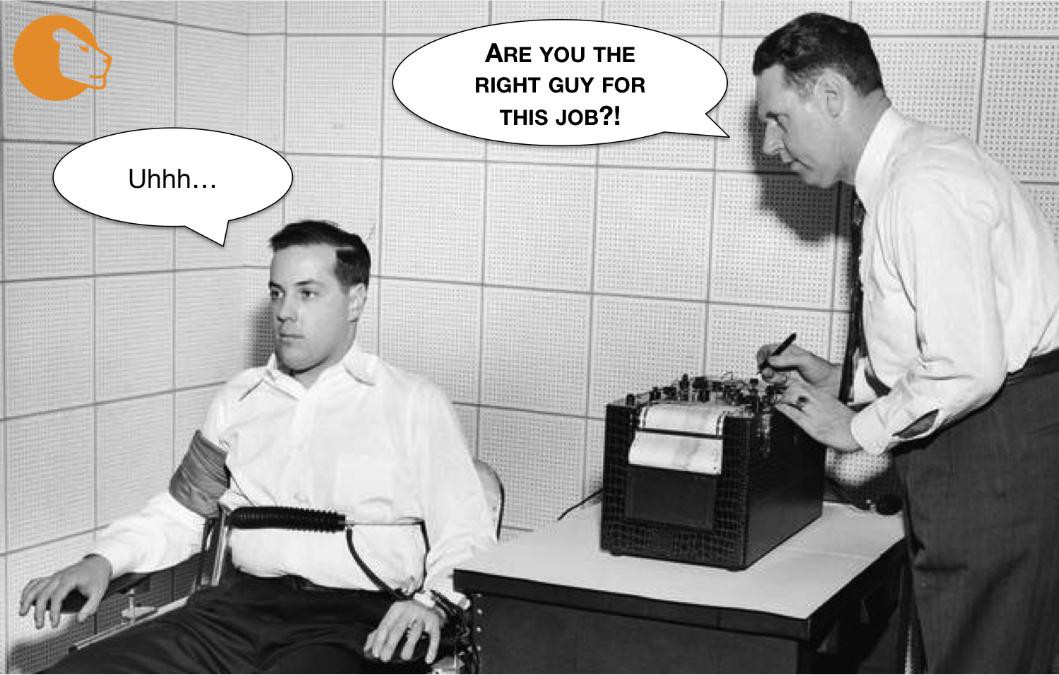
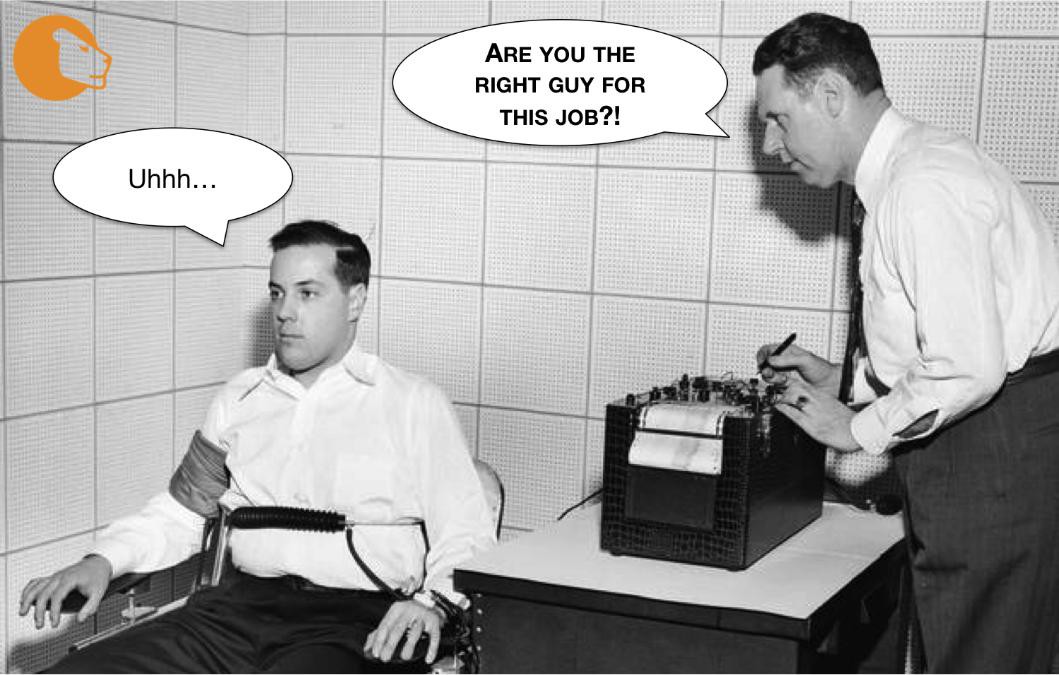
Every manager, HR professional and recruiter faces the same question: Am I recruiting the right candidate for this position? It became essential to be able to discover and acknowledge the value of your future employees and the way they will match to the job position in our fast-paced and technology driven world. Performance is directly correlated to the fit between your candidate’s skills, personality and motivation but also to your company culture, requirements for the job, team members already in place, etc.
Here are the 3 things you need to do:
1 — Evaluate their skills
You want to explore the knowledge and cognizance of every individual, or what the person knows how to do. The skills and aptitudes of a person are usually identified in resumes, diplomas, and experiences. These can also be distinguished via aptitude tests, performance tests, real-life simulations or exercises. Before the meeting, it’s essential to take note of the exact tasks, responsibilities and tools the future employee will have to do, use or learn.
2 — Explore their personalities
This point is crucial and it is the center of the assessment process, in meetings between a recruiter and a candidate. It is not groundbreaking to acknowledge that there is a strong correlation between personality fit and performance in a career. Personality is a complex concept that can be explored in many complementary ways.
We can evaluate it by using personality tests, and with previous employers recommendations, 360-degree feedback or in a well-conducted face-to-face semi-directive interview. The main advantage of using personality tests for interviews (when they are serious!) is that they allow for the standardization and normalization of assessments between different people. Nowadays most are online, easy-to-use and inexpensive. In a way, they allow you to know your candidates before you meet them.
3 — Understand their motivations
Motivation is the third fundamental element to consider while assessing individuals you wish to recruit. It is so important to be aware of people’s aspirations, to know what they seek in their professional lives, and what motivates them. Candidates must select the organization that interests them, identify the people for whom and with which they work, and enjoy the possibilities offered. Every career opportunity must also fit the career plan of the applicant. For example, you can hire the best talent to work for Salesforce.com, but if he is not motivated by the tasks, he will not perform his best, and will leave the company earlier than expected.
If you wish to hire applicants who fit the open position and company culture, make sure you take these points into consideration. While you are free to select a candidate, applicants also choose the company and the people they will work for, their preferred position, and the working framework that matches their expectations.
Adopt the best practices for recruitment and download our free 20 page guide on assessing and selecting talents.
Feel Prepared Your Senior Year
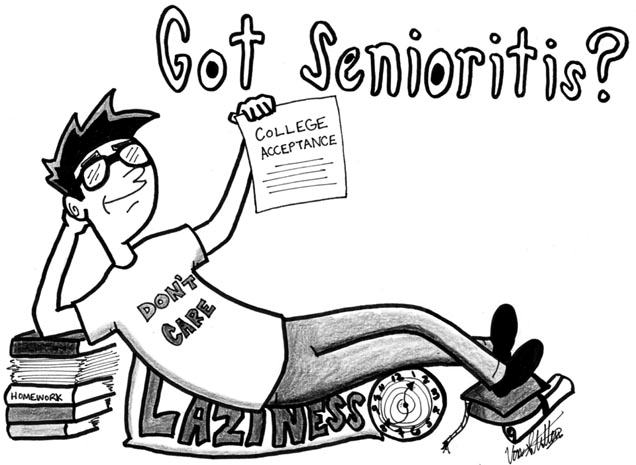
It’s your senior year and you’re really not looking forward to going back to school. We know about having “senioritis.” We really understand it too! For this reason, we want to help with your transition from senior year to a new school. The Talentobe Team has come up with three tips to help you have a positive outlook towards filing applications to different colleges, looking for housing, and meeting new friends or classmates for the coming year.
Tip #1: Applying to colleges
Take a look at your strong points on your personality and motivations radar. Are you someone who is at ease in public? Or do you tend to be an independent and autonomous person? Research schools and programs where your personality and motivations will be satisfied and fulfilled. This way you’ll feel more confident applying to the programs at different schools. You shouldn’t have to drastically tailor yourself to programs; you should feel like you belong where you apply!
Tip #2: Looking for housing
For many of us, tuition fees are extremely high and cannot afford to live on our own. Because of this, we have to look for roommates. Compare your personality and motivations radar with potential roommates via your Talentobe profiles. Do you prefer to have an organized roommate? Or do you want to be roommates with someone who has similar motivations as you? Want to get to know your potential roommate at a more personal level? These types of questions can be answered by simply connecting and sharing profiles. You might just save yourself from a stressful quarter or semester with a roommate you do not get along with.
Tip #3: A-team for group projects
Attending a new school means you’ll meet new people. You may meet some who are studying the same thing as you or are part of other programs that your school offers. Either way, if you are assigned a group project, you will be interested in who you can count on for the completion of these. Who will be the leader, or the event organizer? Who can keep up with stressful situations and meet deadlines? By sharing your personality and motivations results with friends and classmates, you will be able to distinguish each person’s character and might be able to form a grade A-team.
Your personality and motivations radars reveal the real you. After you recognize your talents and motivations, you will feel more confident applying to the programs at different schools, as well as seek roommates and group mates that complement your qualities. So, put senioritis off to the side and take control over your skills and incentives. Invite your friends and classmates to take the Talentobe questionnaire, and compare your results with everyone to identify those whom you can successfully work with in the personal, academic and professional world.